Gravity sewer systems represent some of the most critical and least visible infrastructure in North America. Many of these assets are decades old, operating under variable hydraulic conditions, corrosive atmospheres, and limited historical documentation. For utilities managing large-diameter interceptors and trunk sewers, condition assessment is no longer optional. It is foundational to risk mitigation, capital planning, and regulatory compliance.
Above-flow inspection technologies have emerged as the safest and most efficient way to capture structural data in these environments without confined space entry or full system dewatering. Three primary sensing approaches dominate the discussion: LiDAR, structured light, and photogrammetry. Each has a role, but their capabilities differ significantly, particularly in large-diameter gravity sewers.
This article outlines how each technology functions and where it fits within a modern sewer asset management program, including how RedZone Robotics integrates advanced sensing into comprehensive inspection workflows.
The Operating Environment: Why Above-Flow Matters
Large-diameter gravity sewers, typically 36 inches and greater, often flow partially full. Traditional CCTV methods require bypass pumping or operate below the waterline, limiting structural visibility. Confined space entry introduces safety risks and regulatory burden.
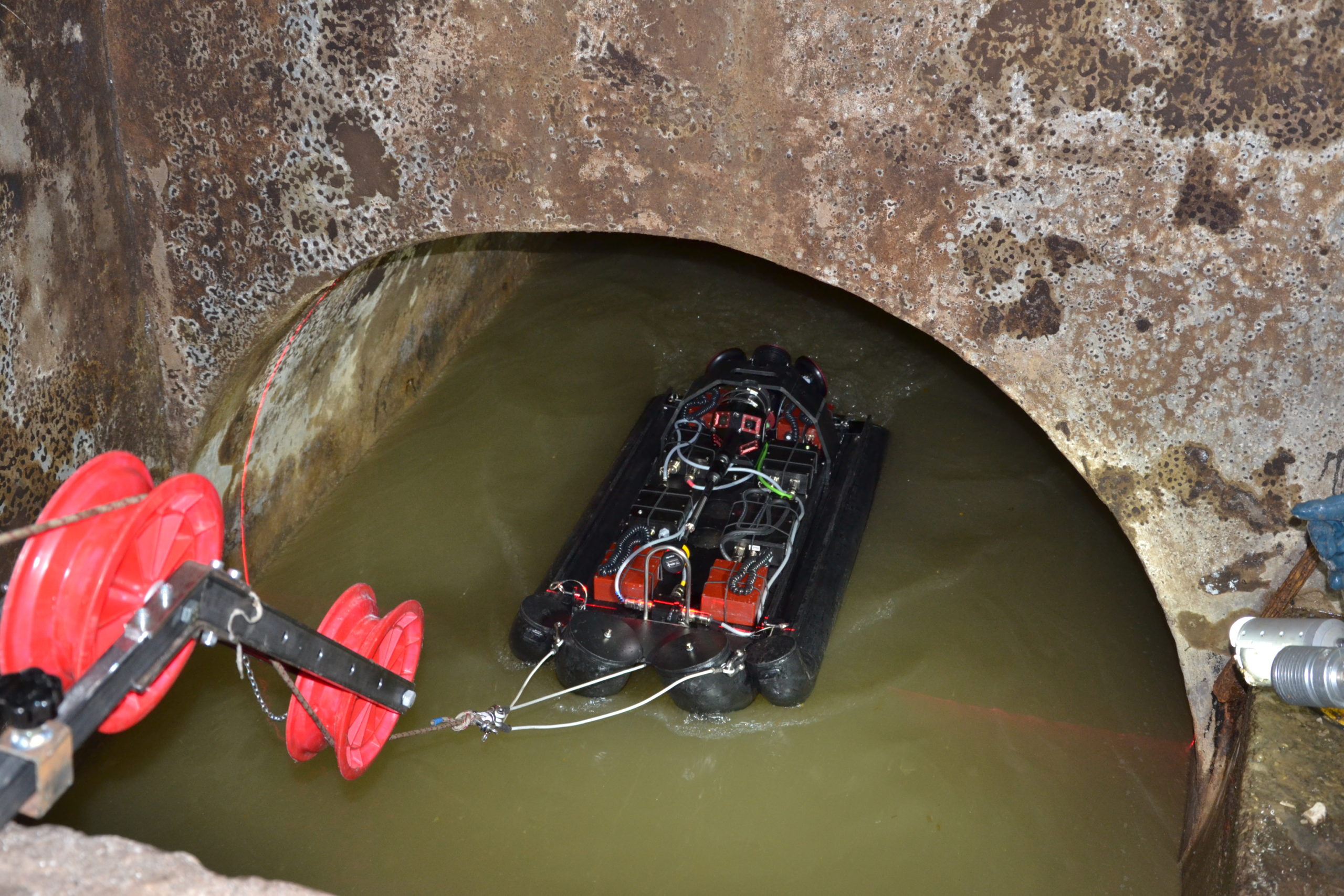
Above-flow inspection platforms, such as robotic or float-mounted systems, operate in live flow conditions. They collect structural data from above the waterline, capturing the crown and upper sidewalls, which are often the most vulnerable to hydrogen sulfide corrosion, joint separation, and structural distress.
The effectiveness of these inspections depends heavily on the sensing technology deployed.
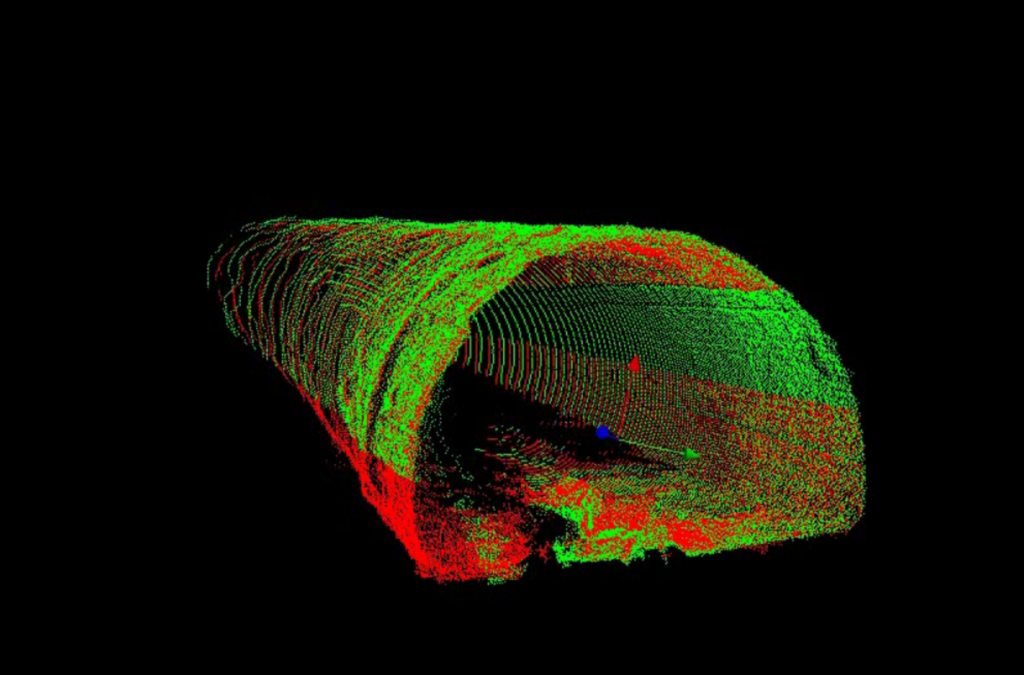
LiDAR: Large-Scale Geometry and Deformation Mapping
LiDAR, or Light Detection and Ranging, uses laser pulses to measure distances and generate a dense three-dimensional point cloud of the interior surface.
In gravity sewers, LiDAR systems emit thousands of pulses per second, scanning the pipe wall as the inspection platform traverses the asset. Reflected laser returns are processed into precise geometric measurements using the time-of-flight principle.
Strengths in Gravity Sewer Applications
- Captures full 3D geometry of large-diameter pipes
- Detects ovality, deflection, and deformation
- Measures offsets at joints and structural movement
- Provides long-range coverage with consistent accuracy
In large interceptors, where geometry drives structural risk, LiDAR is particularly valuable. It excels at identifying global deformation patterns across hundreds or thousands of linear feet. For utilities assessing brick, concrete, or reinforced concrete pipe, LiDAR provides objective dimensional data rather than subjective visual interpretation.
RedZone Robotics integrates LiDAR-based sensing in its large-diameter inspection services, including its multi-sensor platforms that generate engineering-grade point clouds suitable for structural analysis and digital twin development.
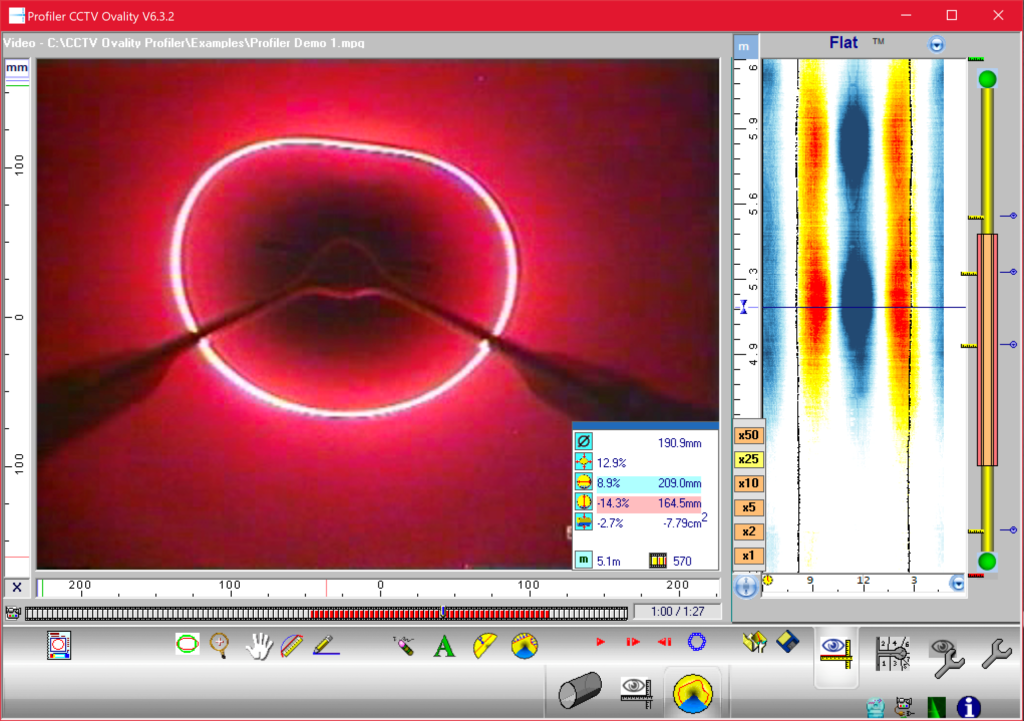
Structured Light: High-Resolution 2D Profiling
Structured light systems project patterned light, often rings or grids, onto the pipe wall. Cameras capture how these patterns deform against the surface. Algorithms convert distortion into precise surface measurements.
Where Structured Light Performs Best
- Detailed surface profiling
- Identification of small-scale corrosion and pitting
- High-precision measurement of surface irregularities
Structured light can provide extremely fine detail over shorter ranges. However, in large-diameter gravity sewers, especially those exceeding 100 inches, maintaining consistent pattern projection over long distances becomes more complex. The technology is often more suited to smaller diameter pipes where precision at close range is the primary objective.
In gravity interceptor environments, structured light can complement other sensors but may not replace long-range 3D mapping tools required for full geometric characterization.
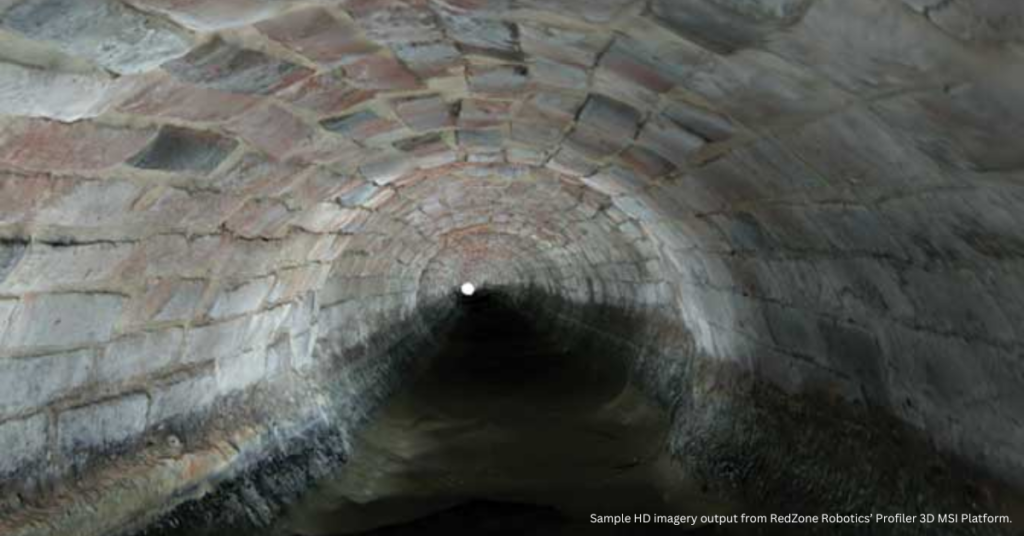
Photogrammetry: Digital Twins Through Image Reconstruction
Photogrammetry relies on overlapping high-resolution images captured from multiple angles. Advanced software identifies common reference points across images and reconstructs a 3D model through triangulation.
Key Benefits in Sewer Inspection
- High-resolution visual documentation
- Creation of textured 3D models
- Identification of corrosion, cracks, and defects
- Enhanced stakeholder visualization
In gravity sewer inspections, photogrammetry is particularly powerful when integrated into a multi-sensor platform. While LiDAR captures geometry, photogrammetry overlays visual texture, enabling engineers to see both dimensional data and surface condition.
RedZone Robotics incorporates photogrammetry into its inspection workflows to support the development of digital twins within its Integrity asset management platform. This allows utilities not only to visualize defects but also to quantify and prioritize them within a broader capital planning framework.
Technology Selection by Pipe Diameter and Risk Profile
Selecting the right sensing approach depends on asset size, material, and inspection objectives.
Large-Diameter Interceptors (Typically 48 Inches and Above)
Primary Need:
- Structural geometry
- Ovality measurement
- Joint displacement
- Long-range scanning
Most effective approach:
- LiDAR combined with high-resolution imaging and photogrammetry
Mid-Range Gravity Sewers (24 to 48 Inches)
Primary Need:
- Surface defect detection
- Moderate geometric accuracy
- Condition grading
Effective approach:
- Structured light or LiDAR depending on required precision and distance
Network-Wide Programs
Primary Need:
- Rapid data acquisition
- Scalable asset assessment
- Integration into asset management systems
Effective approach:
- Multi-sensor platforms integrated with centralized data systems
RedZone’s inspection programs align technology to asset size and program goals rather than relying on a single sensing method. Large-diameter sewer inspection, particularly in critical trunk lines, often benefits from combining LiDAR, imaging, and advanced analytics into a unified dataset.
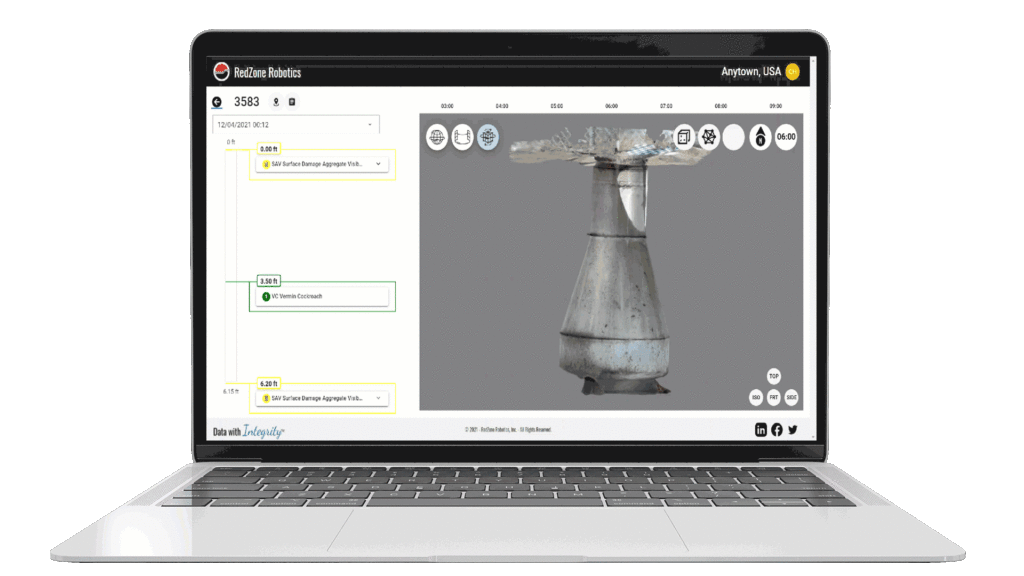
Beyond Data Collection: From Sensors to Decision Intelligence
Collecting data is only the first step. In the gravity sewer industry, the value lies in translating measurements into actionable insight.
A raw point cloud does not prevent collapse. A textured 3D model does not prioritize capital investment. The differentiator lies in:
- Data processing and noise filtering
- Structural analysis interpretation
- Integration into risk-based frameworks
- Alignment with asset management platforms
RedZone Robotics’ Integrity platform exemplifies this evolution. Inspection data from LiDAR and photogrammetry is processed into condition ratings, trend analysis, and digital representations that support engineering decisions. Utilities can compare segments, identify high-risk areas, and justify rehabilitation strategies with defensible data.
Safety, Scale, and the Future of Gravity Sewer Inspection
Above-flow technologies have fundamentally changed how large-diameter gravity sewers are assessed. They reduce confined space entry, eliminate bypass pumping in many cases, and enable rapid network evaluation.
As utilities face aging infrastructure, regulatory scrutiny, and constrained budgets, inspection programs must balance precision with scalability.
- LiDAR provides robust geometric intelligence.
- Structured light offers high-detail surface profiling.
- Photogrammetry delivers visual depth along with digital twin capability.
When integrated properly, these technologies transform inspection from a reactive exercise into a strategic asset management function.
For gravity sewer operators managing interceptors that serve hundreds of thousands of residents, the question is no longer whether to use advanced sensing. The question is how to deploy it in a way that maximizes insight, minimizes risk, and supports long-term infrastructure stewardship.
That is where multi-sensor inspection, advanced analytics, and platform-level integration define the next era of gravity sewer management.uncertainty to clarity and from reactive maintenance to proactive asset stewardship.