
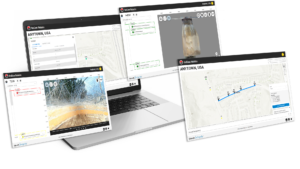
The ROI of Better Data: Why Data Quality Is a Financial Decision
Above-flow inspection technologies are transforming large-diameter gravity sewer assessment. This article compares LiDAR, structured light, and photogrammetry, explaining how each sensor performs in live-flow environments and how integrated multi-sensor platforms deliver the structural insight utilities need for risk-based asset management.
Read More
Come meet RedZone Robotics at WEFTEC
RedZone will be at WEFTEC – New Orleans, Louisiana WEFTEC is the largest annual water quality event in the world — bringing together more than 23,000 water professionals and 950+ exhibitors from over 100 countries. Organized by the Water Environment Federation, it’s the premier platform to discover the latest trends, connect with industry leaders, and find […]
Read More
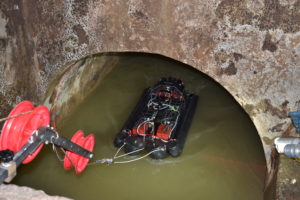
Above-Flow Sewer Inspection: LiDAR, Structured Light, or Photogrammetry?
Above-flow inspection technologies are transforming large-diameter gravity sewer assessment. This article compares LiDAR, structured light, and photogrammetry, explaining how each sensor performs in live-flow environments and how integrated multi-sensor platforms deliver the structural insight utilities need for risk-based asset management.
Read More
Better Data, Faster: Inside P3D – Mapping Underground with Precision
Traditional CCTV provides only a limited view of underground infrastructure. Learn how RedZone's P3D technology converts inspection data into accurate, measurable 3D models, enabling engineers and utilities to assess sewer assets faster, improve decision making, and prioritize maintenance with greater confidence.
Read More
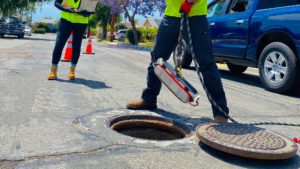
Protect Your Pipes: Advancing Small Diameter Sewer Inspection
Small diameter sewer inspection is critical to managing the majority of wastewater collection systems. Advanced 360-degree imaging, NASSCO-certified defect coding, and GIS integration enable utilities to move from reactive repairs to proactive asset management with faster, safer inspections.
Read More
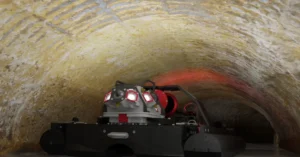
Better Data, Faster: How Advanced Inspection Enabled an Award-Winning Sewer Rehabilitation
Major infrastructure rehabilitation projects rarely begin with construction. They begin with data. The North Outfall Sewer (NOS) Unit 10 rehabilitation project in Los Angeles was recently recognized as the 2025 Trenchless Technology Rehabilitation Project of the Year[1]. It is a perfect example of how high-quality inspection data enables successful engineering and construction outcomes. While the […]
Read More
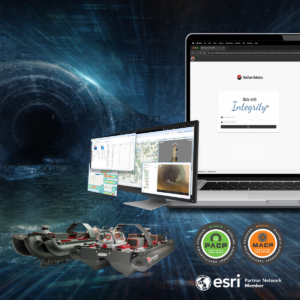
Better Data, Faster: Transforming Infrastructure Inspections
Infrastructure asset management teams face growing pressure to inspect and maintain vast underground networks with limited time and budgets. Traditional inspection methods, often manual, slow, and inconsistent, struggle to keep pace with the increasing demands of modern infrastructure. The result is delayed maintenance, incomplete data, and reactive decision-making that can lead to costly failures. The […]
Read More
Where Do We Go From Here? Turning Sewer Inspection Data into Smarter Capital Planning
Utilities collect thousands of PACP-coded sewer inspections, but most sit unused. This article shows how to analyze historical data to forecast deterioration, prioritize capital projects, optimize inspection cycles, and justify budgets—powered by RedZone’s IntegrityPRO cloud-based predictive platform.
Read More
Come meet RedZone Robotics at IFAT 2026 – Munich, Germany
IFAT Munich is the benchmark global event for environmental technologies and sustainability — hosting over 3,000 exhibitors from more than 60 countries. It’s the go-to platform to discover the latest trends, connect with industry leaders, and find solutions across water management, recycling, and the circular economy. What’s New for RedZone? Stop by our booth #411(c) […]
Read More
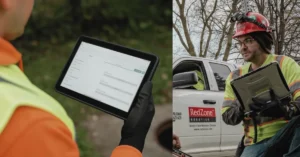
How Integrity™ Mobile Transforms Sewer Work Order Management
Managing a municipal sewer network is a constant exercise in prioritization. Planned cleaning programs, routine inspections, customer callouts, and emergency sanitary sewer overflows all compete for attention, often under unpredictable field conditions. For decades, most utilities relied on paper work orders, radio calls, and manual data entry back at the office. The result was delayed […]
Read More