Ask most utilities what a sewer inspection costs, and they can tell you to the penny.
Ask what bad data costs them, and the answer gets harder because it shows up later, and somewhere else in the budget. It shows up as an emergency repair on a pipe that was quietly failing. As a rehab project on a pipe that didn’t need it yet. As a capital plan built on incomplete information, defended in front of a board with more confidence than evidence.
That’s the real ROI conversation, and it starts with a simple reframe: inspection data isn’t a cost line. It’s the input that determines whether every other infrastructure dollar goes to the right place. And that means the quality of the data you collect is a financial decision, made long before anyone opens a spreadsheet.
The cost of not knowing
Underground infrastructure fails quietly until it fails loudly. And the gap between a planned repair and an emergency one is enormous, not just in direct cost, but in overtime, traffic control, community disruption, regulatory exposure, and the political capital spent explaining a collapse that a better condition assessment could have flagged.
The inverse problem is just as expensive, if less visible: spending rehabilitation dollars on pipes that had years of service life left, because the available data couldn’t distinguish “aging” from “at risk.” When condition data is incomplete or imprecise, utilities compensate by being conservative, and conservative, at scale, means over-spending on healthy assets while true risks go unaddressed.
Either way, the budget pays for the data gap.
Not all inspection data can carry that weight
Here’s the part that gets skipped in most ROI conversations: the decisions above are only as good as the data underneath them. A standard CCTV pass gives you a visual record and an operator’s judgment. That’s enough to spot obvious defects, but it can’t quantify the conditions that actually drive repair-or-defer decisions.
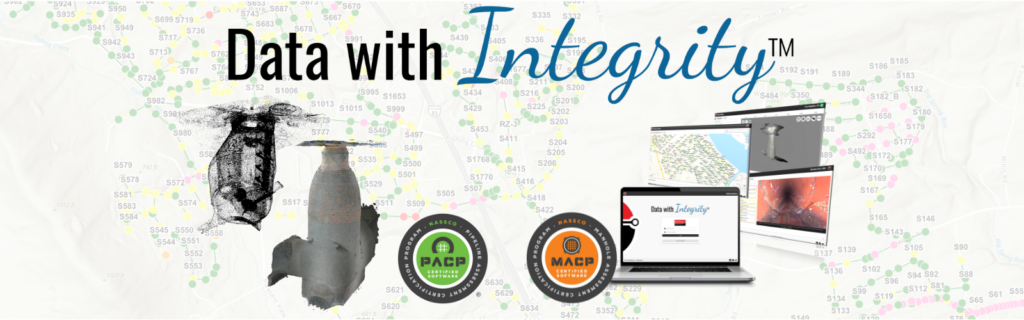
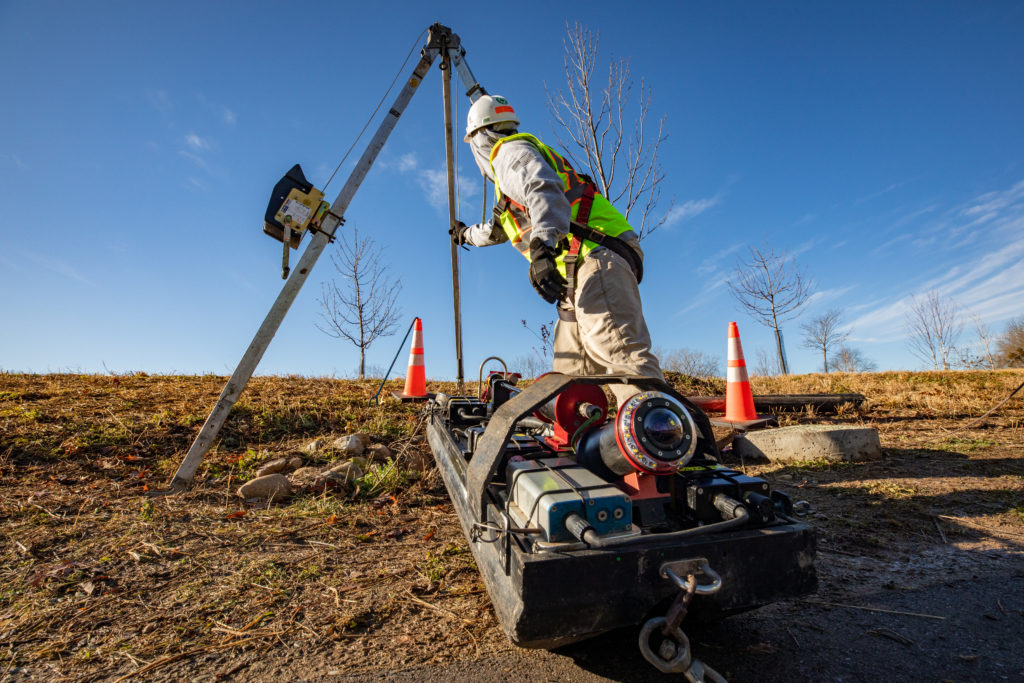
Multi-sensor inspection, combining CCTV, laser, sonar, and gas sensing in a single deployment, measures what a camera alone can only estimate: corrosion depth, sediment levels, ovality, and pipe geometry. The difference isn’t academic. It’s the difference between “this pipe looks rough” and “this pipe has lost 40% of its wall thickness.” One is an opinion. The other is a line item you can rank, budget, and defend.
And when that data lives in a platform like Integrity™, cloud-based, NASSCO-scored, integrated with your GIS, it stays actionable instead of sitting on a hard drive waiting for someone to interpret it.
Math in Practice
The pattern we see across utilities is consistent: the cost of better data is a fraction of the cost of the decisions it improves. A single avoided emergency repair, a single correctly deferred rehab project, a single rate case supported by measured, not estimated, condition data. Any one of these can return the investment in the inspection program that made it possible.
Collecting quality data is the first half of the equation. The second half is turning it into a capital plan. And we’ve written about exactly that in Where Do We Go From Here? Turning Sewer Inspection Data into Smarter Capital Planning [internal link]. Together, they’re the full picture: measure it right, then put it to work.
That’s what “Better Data, Faster” means. Not speed for its own sake, but data accurate enough and available soon enough to change the multi-million-dollar decisions that follow it.
Put better data to work
If your next capital plan is going to be built on inspection data, the quality of that data is the quality of the plan. Talk to our team about what multi-sensor inspection would look like on your system.