Gravity sewer systems don’t collapse overnight. They degrade slowly—over decades—through structural defects, infiltration, debris buildup, and shifting loads or soils. For asset managers and engineers, the real challenge isn’t spotting issues during inspections; it’s deciding when and where to act before small problems become expensive emergencies.
Utilities pour significant resources into inspection programs: deploying crews for CCTV, coding defects per NASSCO PACP standards, and logging observations across thousands of segments. Yet too often, once the data is collected, it sits archived—disconnected from capital improvement plans (CIP), rehabilitation prioritization, or budget justification.
The key question: What do we actually do with all this inspection data?
From Archived Records to Prioritized Capital Investments
A single inspection offers a snapshot of current conditions. Capital planning demands foresight: projecting how that condition will evolve and identifying assets nearing critical intervention thresholds.
Deterioration isn’t uniform. Some segments accelerate due to corrosive soils, high groundwater, traffic loading, or material age; others hold steady for years. Analyzing historical inspections collectively—rather than one-off—reveals trends: where defects are progressing fastest, where risk is concentrating, and which pipes are approaching the point where repair, rehab, or replacement becomes urgent.
This data-driven view shifts capital dollars from reactive fixes to proactive targeting. By focusing limited budgets on high-risk, high-consequence assets first, utilities can:
- Defer non-critical spend by addressing issues early
- Extend overall asset life
- Align CIP with actual system behavior rather than guesswork or worst-case assumptions
Rethinking Fixed Inspection Cycles for Risk-Based Efficiency
Fixed-interval inspections (e.g., every 5–10 years across the board) are simple to schedule but inefficient. Stable pipes show minimal change between visits, while high-risk ones can degrade noticeably in shorter windows.
Historical data lets you trend PACP scores and defect progression, then tailor cycles: more frequent reinspections in accelerating zones, extended intervals for low-change segments. This optimizes crew time and budgets without sacrificing coverage—freeing resources to inspect emerging hotspots or support more detailed capital scoping.
Shifting from Reactive Repairs to Planned Interventions
Even without sudden pressure failures, gravity sewers trigger emergencies: collapses, blockages, SSOs during wet weather, or capacity loss from infiltration. These force costly, unscheduled work—traffic disruptions, customer complaints, overtime, and premium pricing.
Proactive insight changes that. Spotting accelerating deterioration early allows planned rehab (e.g., lining, point repairs, or full replacement) under controlled conditions. The payoff: fewer emergencies, lower total ownership costs, and more predictable budgeting.
Building a Defensible Case for Inspection Investments
Inspection programs are often seen as a compliance checkbox or line-item expense. When results stay siloed, it’s hard to show ROI to finance directors or councils.
Link inspection data directly to capital outcomes—prioritized projects, risk-reduced budgets, deferred expenditures—and the value becomes clear. You can demonstrate how dollars spent on inspections inform defensible CIPs, extend infrastructure life, minimize service interruptions, and support rate stability.
Unlocking Capital Insight with IntegrityPRO
To turn your existing CCTV archives into strategic capital planning tools, RedZone Robotics offers IntegrityPRO—a cloud-based AI predictive analytics platform powered by VODA.ai.
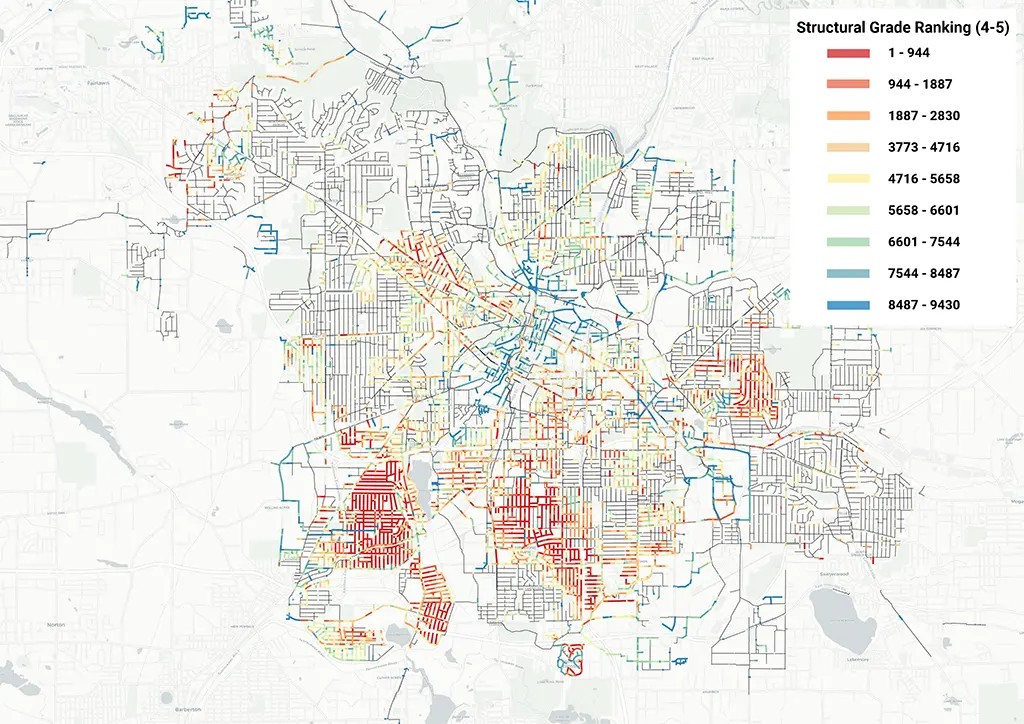
IntegrityPRO ingests historical PACP-coded inspections, maintenance records, and a proprietary blend of geospatial, environmental, and relational factors. Its machine learning models forecast deterioration trajectories and flag assets approaching intervention thresholds—not for sudden failure, but for smart, timely action.
Asset managers use IntegrityPRO to:
- Prioritize inspection sequences and rehab candidates
- Generate risk-based capital project lists
- Justify budgets with predictive evidence
- Integrate seamlessly with RedZone’s ASAP program for guided fieldwork and continuous model refinement
Rather than collecting more data, IntegrityPRO helps you extract maximum value from what you already have—driving proactive, defensible decisions.
The Path Forward: From Data Collection to Capital Confidence
Inspection alone doesn’t lower risk. Strategic application does.
By treating your inspection records as a living capital planning asset, you gain the ability to:
- Align budgets with real deterioration trends
- Optimize inspection frequency around actual risk
- Minimize reactive work and service disruptions
- Present clear, evidence-based cases to stakeholders
The future of gravity sewer management isn’t about gathering endless footage—it’s about using existing data smarter. IntegrityPRO makes that shift practical and powerful.
Ready to see how your inspection data can inform your next CIP cycle? Contact RedZone Robotics or visit redzone.com/integritypro to explore IntegrityPRO.